
Introduction
Dog drawing is one of the most rewarding artistic skills you can learn, whether you’re a beginner sketching your first puppy or an experienced artist aiming to create realistic canine portraits. Dogs are beloved companions in millions of American households, making them one of the most popular subjects for artists, hobbyists, students, and pet lovers alike.
At its core, dog drawing is the process of capturing a dog’s structure, personality, expression, and movement through art. From simple cartoon puppies to highly detailed realistic portraits, learning how to draw dogs helps improve observation skills, anatomy knowledge, shading techniques, and overall artistic confidence.
The growing popularity of social media platforms, digital illustration tools, pet portrait businesses, and online art communities has made dog drawing more relevant than ever. Many artists now earn income by creating custom pet portraits, while others use canine sketches to improve their illustration portfolios.
In this comprehensive guide, you’ll discover proven techniques, essential drawing principles, common mistakes to avoid, and practical strategies that can dramatically improve your dog drawing skills. Whether you want to draw a Golden Retriever, German Shepherd, Labrador, Bulldog, or mixed-breed companion, the techniques discussed here will help you create more accurate and engaging artwork.
Understanding the Fundamentals of Dog Drawing
Before attempting a detailed dog drawing, it is important to understand the basic structure of a dog’s body. Every breed may look different, but all dogs share similar skeletal and muscular foundations. Learning these foundational shapes allows artists to simplify complex forms into manageable components.
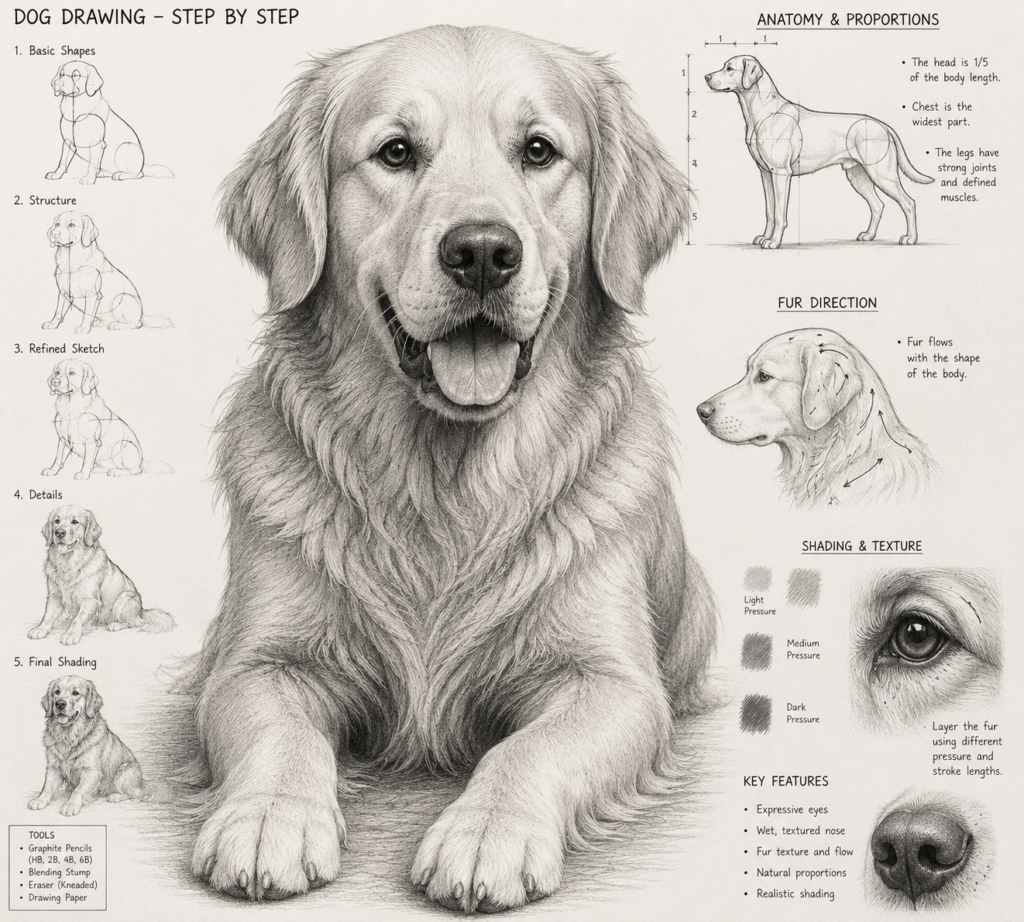
Most professional artists begin a dog drawing using circles, ovals, and connecting lines. The head is often represented by a circle, the muzzle by an oval, and the torso by larger rounded shapes. This construction method helps establish accurate proportions before adding details. By focusing on these simple forms first, artists can avoid many common proportion mistakes that occur during early sketching stages.
Another key aspect of dog drawing is understanding weight distribution. Dogs stand, sit, run, jump, and rest in ways that reveal their anatomy. Observing how the legs support the body and how the spine curves during movement helps create more realistic sketches. Even cartoon dog drawings benefit from a strong understanding of canine structure.
Additionally, studying reference photos is highly recommended. Professional illustrators rarely rely solely on memory. Instead, they examine multiple references to understand anatomy, fur patterns, lighting, and expressions. This practice significantly improves drawing accuracy over time.
Essential Tools for Better Dog Drawing Results
The tools you use can influence the quality and ease of your dog drawing process. Fortunately, beginners do not need expensive materials to achieve impressive results. A few basic supplies can provide everything necessary to create beautiful canine artwork.
Traditional artists often start with graphite pencils ranging from HB to 6B. Harder pencils help create light construction lines, while softer pencils produce rich shadows and darker details. Quality sketch paper also improves the overall drawing experience because it handles shading and erasing more effectively.
For artists interested in digital dog drawing, tablets and illustration software offer incredible flexibility. Programs such as Procreate, Photoshop, and Clip Studio Paint provide layers, custom brushes, and advanced editing capabilities. Digital tools allow artists to experiment freely without worrying about damaging the original sketch.
Regardless of the medium chosen, maintaining clean tools is important. Sharp pencils create more precise lines, while organized digital brushes improve workflow efficiency. Many successful artists focus more on mastering fundamentals than on purchasing expensive equipment, proving that skill matters far more than tools alone.
How to Draw Dog Faces with Accuracy
The face is often the most important part of any dog drawing because it captures personality and emotional expression. Viewers naturally focus on the eyes, nose, and mouth first, making facial accuracy essential for successful artwork.
When drawing a dog’s face, artists should begin by establishing the overall head shape. Different breeds have dramatically different skull structures. A Bulldog has a broad, compact head, while a Greyhound possesses a longer, narrower profile. Understanding breed-specific characteristics helps create more recognizable and realistic portraits.
The eyes deserve special attention because they communicate emotion. Slight adjustments in eye shape, eyelid position, and pupil size can dramatically change the expression of the dog. A relaxed dog often has softer eyes, while an alert dog displays a more focused gaze. Adding subtle highlights can make eyes appear more lifelike and engaging.
The nose and muzzle are equally important. Dogs possess unique nose textures and varying muzzle lengths. Careful observation of these details can transform an average sketch into a convincing portrait. Artists who spend extra time refining facial features often achieve stronger emotional connections with viewers.
Mastering Dog Anatomy for Realistic Artwork
Realistic dog drawing requires a deeper understanding of canine anatomy. While artists do not need veterinary-level knowledge, recognizing major anatomical landmarks significantly improves accuracy and realism.
The canine skeleton determines the overall structure of the body. Key areas include the shoulder blades, rib cage, pelvis, and leg joints. These landmarks influence how muscles and fur appear across the dog’s body. Without understanding these structural elements, drawings can appear stiff or unnatural.
Muscle groups also play a major role in realistic dog drawing. Athletic breeds such as German Shepherds, Dobermans, and Belgian Malinois display more visible muscle definition than fluffier breeds like Samoyeds or Chow Chows. Observing these differences helps artists portray each breed accurately.
Movement studies provide another valuable learning opportunity. Sketching dogs while they walk, run, or play improves understanding of body mechanics. Many professional illustrators fill sketchbooks with quick gesture drawings that capture motion and energy rather than focusing exclusively on details.
Techniques for Drawing Different Dog Breeds
One fascinating aspect of dog drawing is the incredible variety among breeds. According to major kennel organizations, hundreds of recognized breeds exist worldwide, each possessing unique physical characteristics.
Drawing a Labrador Retriever involves capturing a strong, balanced body with a broad head and friendly expression. In contrast, a Dachshund requires attention to its elongated body and short legs. These differences demand careful observation and adaptation from the artist.
Breed-specific fur patterns also affect the drawing process. Short-haired breeds reveal anatomy more clearly, while long-haired breeds require artists to understand how fur flows over underlying structures. Learning to distinguish between body shape and fur volume is essential for accurate breed representation.
Studying breed standards can be surprisingly helpful. Official breed descriptions often highlight defining characteristics that artists should emphasize. By focusing on these distinctive traits, dog drawings become more recognizable and authentic.
Creating Realistic Fur and Texture
Many artists find fur rendering to be one of the most challenging aspects of dog drawing. However, realistic fur is less about drawing every individual hair and more about understanding texture, direction, and value relationships.
A common beginner mistake is attempting to sketch each strand separately. This approach often results in messy, unrealistic drawings. Professional artists instead focus on larger fur masses and gradually introduce selective detail where necessary.
Observing fur growth patterns is extremely important. Fur follows the contours of the body and changes direction around joints, facial features, and muscle groups. Accurately depicting these directional changes creates a more natural appearance and reinforces underlying anatomy.
Shading plays a critical role in texture creation. Strategic highlights and shadows can suggest soft, fluffy fur or sleek, short coats without excessive detail. Effective value control often contributes more to realism than painstakingly rendering individual hairs.
Common Dog Drawing Mistakes and How to Avoid Them
Even talented artists encounter challenges when learning dog drawing. Recognizing common mistakes can accelerate improvement and reduce frustration throughout the learning process.
One frequent error involves incorrect proportions. Beginners often create heads that are too large or legs that are too short. Starting with construction shapes and measuring relationships between body parts helps prevent these issues.
Another common mistake is neglecting anatomical structure beneath the fur. Because dogs are covered in fur, some artists overlook skeletal and muscular foundations. This often leads to flat or distorted drawings that lack realism. Understanding anatomy remains important regardless of coat length.
Overworking details too early is another problem. Many artists rush into drawing eyes, fur, or facial features before establishing accurate proportions. Professional workflows typically prioritize structure first and details later. Following this sequence often produces stronger final results.
Finally, relying exclusively on memory can limit progress. Consistent use of reference images exposes artists to new perspectives, poses, and anatomical variations that strengthen observational skills.
Step-by-Step Dog Drawing Workflow
A structured workflow helps artists create more consistent and successful dog drawings. Following a clear sequence reduces errors and improves overall efficiency.
The process typically begins with selecting quality references. High-resolution photographs with good lighting provide valuable visual information. Multiple reference angles can further enhance understanding of the subject.
Next comes the construction phase. Artists sketch basic shapes representing the head, torso, and limbs. During this stage, accuracy is more important than detail. Refining proportions early prevents major corrections later in the process.
Once the structure is established, artists define anatomy and major forms. This involves refining contours, adding facial features, and clarifying muscle groups. Afterward, shading and texture work begin, gradually increasing realism through careful value development.
The final stage focuses on details and finishing touches. Artists enhance eyes, refine fur textures, adjust contrast, and strengthen focal points. These subtle improvements often elevate a drawing from good to exceptional.
Digital Dog Drawing Trends and Modern Techniques
Technology has transformed dog drawing in recent years. Digital art platforms have opened new opportunities for artists, pet portrait businesses, and content creators seeking efficient workflows and professional-quality results.
Many digital artists use custom brushes designed specifically for fur rendering. These brushes can simulate realistic textures while reducing repetitive manual work. Layer systems also allow artists to experiment with colors, shading, and effects without permanently altering their drawings.
Social media platforms have further influenced dog drawing trends. Time-lapse videos, tutorial content, and pet portrait showcases attract millions of viewers. Artists who share their creative process often build strong online audiences and establish profitable businesses around their artwork.
Artificial intelligence and advanced illustration software are also influencing creative workflows. While traditional drawing skills remain essential, modern tools can assist with reference gathering, composition planning, and workflow optimization. Artists who combine strong fundamentals with technology often achieve impressive results.
Turning Dog Drawing Into a Creative Business
For many people, dog drawing evolves from a hobby into a profitable creative venture. The growing demand for custom pet portraits has created numerous opportunities for skilled artists.
Pet owners frequently commission artwork to celebrate beloved companions, memorialize pets, or create personalized gifts. These commissions can range from simple sketches to highly detailed realistic portraits. Artists who specialize in dog drawing often develop distinctive styles that attract dedicated clients.
Building an online portfolio is essential for success. Platforms such as personal websites, online marketplaces, and social media channels allow artists to showcase their work and reach broader audiences. Consistent posting and professional presentation can significantly increase visibility.
Pricing strategies vary depending on experience, complexity, and medium. Successful artists calculate costs based on time, materials, and market demand. As skills improve and reputation grows, rates can increase accordingly. Dog drawing offers both creative fulfillment and meaningful income potential for dedicated artists.
Advanced Tips to Take Your Dog Drawing to the Next Level
Once artists master the basics, advanced techniques can elevate their dog drawing skills considerably. These methods focus on observation, storytelling, composition, and artistic expression rather than technical accuracy alone.
One powerful technique involves emphasizing personality. Every dog possesses unique behaviors, expressions, and mannerisms. Capturing these individual traits transforms a generic drawing into a memorable portrait. Observing how a dog tilts its head, positions its ears, or reacts to surroundings can reveal valuable artistic opportunities.
Composition also influences viewer engagement. Placing the dog strategically within the frame, controlling focal points, and using effective lighting can dramatically enhance visual impact. Professional artists often spend significant time planning compositions before beginning detailed rendering.
Continuous practice remains the most important factor in artistic growth. Regular sketching sessions, anatomy studies, breed research, and constructive feedback all contribute to long-term improvement. Artists who commit to consistent learning often experience remarkable progress over time.
Conclusion
Dog drawing combines observation, creativity, technical skill, and artistic expression into one highly rewarding pursuit. Whether your goal is creating realistic pet portraits, designing cartoon characters, improving illustration skills, or launching a creative business, mastering dog drawing provides countless opportunities for growth.
Throughout this guide, we’ve explored anatomy fundamentals, facial construction, breed differences, fur rendering techniques, digital trends, common mistakes, and professional development strategies. Together, these concepts form a strong foundation for creating compelling canine artwork.
The most important takeaway is that successful dog drawing is built through consistent practice and careful observation. Every sketch teaches valuable lessons about proportion, structure, texture, and expression. Over time, those lessons accumulate into genuine artistic mastery.
Keep studying dogs, keep drawing regularly, and keep challenging yourself with new subjects. The next dog drawing you create may be your best one yet.
FAQs
What is the best way for beginners to start dog drawing?
The best way to start dog drawing is by using simple geometric shapes to build the dog’s structure before adding details. Begin with circles and ovals for the head and body, then connect them using guideline sketches. Focus on proportions and anatomy rather than fur or shading initially. Using clear reference photos can dramatically improve accuracy. Practicing basic canine forms repeatedly helps beginners develop confidence and establish strong foundational skills that make more advanced drawing techniques easier to learn later.
How long does it take to learn realistic dog drawing?
Learning realistic dog drawing depends on practice frequency, study methods, and artistic experience. Beginners who practice consistently several times per week often notice significant improvement within a few months. Mastering anatomy, fur texture, lighting, and facial expressions may take years of dedicated study. However, meaningful progress happens much sooner. Artists who use reference photos, analyze canine anatomy, and complete regular drawing exercises generally improve faster than those relying solely on memory.
What pencils are best for dog drawing?
Graphite pencils are among the most popular tools for dog drawing. Many artists use HB pencils for sketching, 2B pencils for general shading, and 4B to 6B pencils for darker values and contrast. Mechanical pencils can provide precise details, particularly around eyes and facial features. High-quality sketch paper also contributes to better results. While professional materials can help, strong drawing fundamentals remain more important than expensive supplies.
Why does my dog drawing look unrealistic?
A dog drawing often appears unrealistic due to proportion errors, weak anatomical understanding, inconsistent lighting, or incorrect fur rendering techniques. Many beginners focus on details too early instead of establishing structure first. Studying canine anatomy, measuring proportions carefully, and using reference photos can significantly improve realism. Paying close attention to shadows, highlights, and facial expressions also helps create more convincing and lifelike artwork.
Can I make money from dog drawing?
Yes, many artists earn income through dog drawing by offering custom pet portraits, selling prints, creating digital artwork, or teaching drawing techniques online. Pet owners frequently commission artwork to celebrate their dogs or create meaningful gifts. Building a professional portfolio, maintaining an online presence, and developing a recognizable style can attract clients. As skills and reputation grow, dog drawing can become a profitable side business or even a full-time career.
Is digital dog drawing easier than traditional drawing?
Digital dog drawing offers advantages such as layers, undo functions, custom brushes, and flexible editing tools. These features can simplify certain aspects of the artistic process. However, digital drawing still requires strong fundamentals in anatomy, shading, perspective, and composition. Traditional and digital methods each present unique challenges. Artists who understand core drawing principles can successfully transition between both mediums and benefit from their respective strengths.
How can I improve my dog drawing quickly?
The fastest way to improve dog drawing is through focused practice using high-quality references. Study canine anatomy, sketch different breeds regularly, and analyze professional artwork for inspiration. Creating quick gesture drawings helps develop observation skills and understanding of movement. Reviewing mistakes and seeking constructive feedback can accelerate growth. Consistent practice, even for short periods each day, typically produces better results than occasional long drawing sessions.
Read More About: dailynwes.blog